
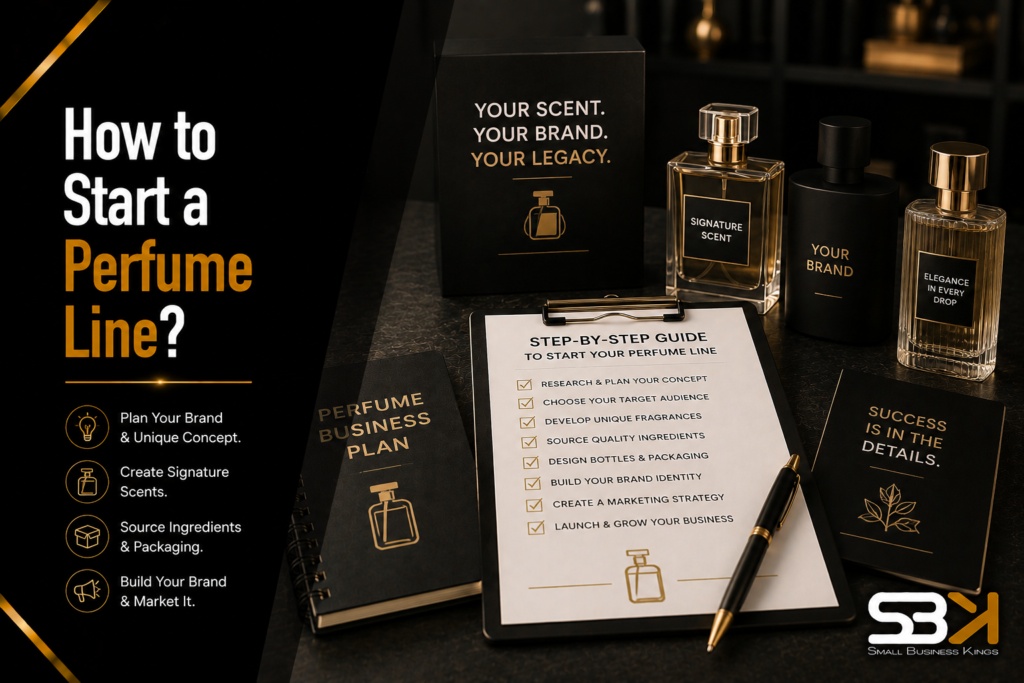
How to Start a Perfume Line: A Step-by-Step Guide?
Starting a perfume line means choosing a sourcing path for your fragrance (custom-developed or private-labeled), securing bottles and packaging, registering your business and complying with FDA cosmetic labeling rules, and launching through a mix of small-batch testing, direct sales, and retail. It’s a real manufacturing business with meaningful upfront costs and a multi-month timeline, not a side project you can launch overnight — understanding the real trade-offs at each step is what separates founders who make it past year one from those who don’t.
What It Actually Costs and How Long It Takes
Cost figures for launching a perfume line vary enormously depending on scope, and you should treat any single number you see online with some skepticism. For context: one US fragrance manufacturer’s president has stated that using an existing finished fragrance, a minimum run of 200 branded, packaged, filled, and capped bottles can run $8,000 to $10,000 [Source: Arnold Zlotnik, President and CEO, Alpha Aromatics], though this figure is specific to that scenario and provider — a fully custom fragrance developed from scratch, different bottle counts, or different packaging choices will change the total significantly.
Automate & Scale Your Small Business
Replace 10+ costly subscriptions with 1 all-in-one CRM, Funnels & Marketing Engine.
On timeline, a realistic expectation is at least 12 months from a finished fragrance formula to actual product launch, once you account for supplier lead times, safety testing, and packaging production — and that’s after your fragrance itself is already finalized, not including the planning and development time before it.
Treat any online cost estimate as a rough starting point for your own research, not a number to budget against directly. Get actual quotes from suppliers and fragrance houses for your specific scope before committing.
Step 1: Define Your Brand Concept and Target Market
Before sourcing anything, get specific about:
🚀 Top Rated Web Hosting ⚠ Save 30% TodayLaunch Your Business On Fast VPS Hosting
Secure, high-performance hosting designed for growth. Don't lose sales to slow site speed.
- Product format — a single scent across multiple formats (perfume, lotion, soap), or one product line in several distinct scents
- Target demographic — age range, gender positioning (or intentionally unisex), and price tier
- Fragrance family — floral, woody, citrus, oriental/amber, or fruity, each appealing to different customer segments and occasions
- Brand message — what abstract idea or feeling your fragrance represents (confidence, calm, nostalgia, rebellion), since scent alone rarely sells a product without a clear emotional hook attached to it
This planning stage also means researching your competitors directly — their pricing, packaging choices, and marketing angles — to find an underrepresented gap you can credibly occupy rather than competing head-on with established players on their own terms.
Step 2: Choose Your Fragrance Sourcing Path
This is the decision that shapes almost everything else about your cost structure, timeline, and exclusivity. There isn’t one right answer — it depends on your budget and how much differentiation you actually need at launch.
Sourcing Path What It Means Cost & Timeline Exclusivity Best For Custom fragrance development A perfumer or fragrance house creates a unique scent formulated specifically for your brand Highest cost, longest timeline (formulation, iteration, and testing take real time) Full — no other brand can sell your exact formula Founders prioritizing a distinct scent identity and willing to invest in it upfront Private label You select from a fragrance house’s existing formulas and brand it as your own Moderate cost, faster to market Limited — the same or similar formulas may be available to other brands Founders wanting real branding control without the cost of full custom development White label You sell an existing, pre-branded fragrance with minimal customization Lowest cost, fastest to market Very limited — competitors may sell the identical product Founders testing the market with minimal upfront risk Dropshipping No inventory; a supplier ships directly to customers under your storefront branding Lowest investment, essentially no lead time None — least differentiated model E-commerce-first founders prioritizing low overhead over brand distinctiveness Most founders serious about building a lasting brand start with private label to control cost while still owning real branding, then move toward custom development once they’ve validated demand.
Free Business Blueprint
Steal the roadmap smart entrepreneurs use to launch, grow, and scale their businesses while avoiding expensive mistakes.
Step 3: Source Your Bottles, Caps, and Packaging
Packaging is not an afterthought in this industry — it often carries as much weight in a customer’s purchase decision as the scent itself, and it’s frequently one of your largest cost categories.
- Bottle shape and finish should match your brand tier — a $60-an-ounce fragrance needs to look and feel like it, through weight, glass quality, and finish (frosted glass, embossing, premium caps)
- Minimum order quantities (MOQs) vary significantly by supplier — some stock bottle suppliers offer low MOQs suitable for a first small run, while others require large custom orders; confirm this before designing around a bottle that isn’t actually available at the volume you need
- Labels and boxes can often be designed affordably using standard design tools and printed locally for a first run, with more custom decoration (hot stamping, silk-screen printing) reserved for later runs once volume justifies the added cost
- Confirm filling compatibility early — spray pump size, bottle neck fit, and sealing all need to align, since a mismatch here causes leakage or inconsistent spray performance that can damage your reputation faster than a mediocre scent would
Step 4: Work With a Fragrance House or Perfumer
Whether you’re pursuing custom development or private label, you’ll work with a fragrance supplier at some point:
- Ask about minimum order quantities up front — many fragrance houses require a minimum weight or dollar value of fragrance concentrate per order, and this affects your total upfront investment directly
- Understand the note structure you’re working with — top notes (what you smell first, evaporating quickly), middle notes (the heart of the fragrance), and base notes (what lingers longest on skin) — even if you’re not blending yourself, understanding this helps you give useful feedback during development
- Request stability testing before finalizing your formula — reputable fragrance labs test formulas under varying temperature and light conditions to confirm the scent holds up over time and across real-world storage conditions, not just in a controlled lab environment
- Start with a small-batch test run rather than committing to full-scale production immediately, so you can gather real feedback on scent, packaging durability, and market interest before investing in a larger order
Step 5: Register Your Business and Handle US Legal Requirements
This is the section most guides on this topic skip past quickly, but it has real compliance consequences for a US-based founder:
- Choose a business structure — LLC, sole proprietorship, or corporation — based on your liability tolerance and growth plans; an LLC is common for product-based businesses specifically because it separates personal assets from business liability
- Register your business name with your state and, if applicable, your city or county
- Search for trademark availability before you fall in love with a name. Use the US Patent and Trademark Office’s public search tool (TESS) to check whether your proposed brand or product name is already registered in a relevant class before investing in packaging, labels, or marketing built around it. Skipping this step is one of the most common and costly mistakes new perfume brands make — rebranding after launch, once packaging and marketing already exist, is far more expensive than checking first.
- Understand FDA cosmetic labeling requirements. Perfume sold in the US is regulated by the FDA as a cosmetic (not a drug, unless you make a therapeutic claim), which means your labeling must meet specific requirements — ingredient listing using standardized INCI names, net quantity of contents, and manufacturer or distributor information, among other rules. Confirm current requirements directly through the FDA’s cosmetics labeling guidance rather than assuming a competitor’s label format is automatically compliant.
- Consider product liability insurance. As a physical product sold to consumers, a perfume brand carries real liability exposure (allergic reactions, skin irritation, mislabeled ingredients) — this is a conversation worth having with an insurance professional before your first sale, not after an incident.
Step 6: Manufacture and Test Before Scaling
- Start with a limited first run — many founders begin in the range of a few hundred bottles rather than committing to thousands, specifically to test real market demand before locking in a larger, harder-to-adjust order
- Wear-test your own product extensively before finalizing — reputable perfumers often test a fragrance on skin over weeks or months, gathering feedback from trusted testers, and refining before calling a formula final
- Confirm your filling company’s capacity matches your growth plans — it’s common to self-fill very small initial runs yourself, then transition to a dedicated filling company once volume exceeds what you can reasonably manage by hand; many filling companies have their own minimum order requirements, so confirm this fits your production timeline
Step 7: Build Your Brand and Marketing Strategy
Fragrance is a uniquely difficult product to market because you can’t convey scent through a screen or a page — which is exactly why sensory and emotional marketing matter more here than in most product categories:
- Use imagery, texture, and story to imply scent rather than attempting to literally describe it — most successful fragrance advertising leans on aspirational imagery and abstract emotional association rather than technical scent description
- Offer samples aggressively — scent strips, small sachets, or trial-size bottles let a potential customer actually experience the product, which matters more for fragrance than for almost any other product category, since scent can’t be conveyed through a photo or a review alone
- Build a professional website and e-commerce presence early, since a meaningful share of fragrance discovery and purchasing now happens online rather than exclusively through in-person retail
Step 8: Choose Your Sales and Distribution Channels
Channel Profit Margin Effort to Set Up Best For Direct-to-consumer website Highest — no middleman Moderate — requires building and maintaining an e-commerce presence Brands prioritizing full control over pricing, branding, and customer data Online marketplaces (Amazon, Etsy) Lower — listing and referral fees Low — established audience already exists Brands wanting fast access to buyers without building their own traffic Wholesale to boutiques/retail Lowest per unit — wholesalers typically take a significant cut before retail markup High — requires building distributor and retailer relationships Brands prioritizing broader physical retail presence over per-unit margin Subscription boxes Moderate, recurring Moderate — ongoing content and retention effort Brands building a loyal, recurring customer base over one-time sales Most new fragrance brands start direct-to-consumer to preserve margin and control while they’re still establishing their identity, then add wholesale or marketplace channels once the brand has some market traction to offer retail partners.
Setting Up Your Online Presence and Customer Systems
Since so much of fragrance discovery and purchasing happens online, your website and how you manage customer relationships matter as much as your bottle design. A polished, professional site with strong product photography and a CRM that actually tracks customer orders and repeat purchases gives you a real advantage over competitors still managing sales through scattered spreadsheets and inboxes. SBK works with Softangles for exactly this — they handle business website design, hosting, logo and brand/media design, and CRM/sales pipeline setup, which gives a new fragrance brand a professional online presence and organized customer tracking from day one instead of retrofitting it after launch.
Frequently Asked Questions
How much does it really cost to start a perfume line?
Costs vary enormously depending on your sourcing path, bottle count, and packaging choices — one US manufacturer has cited $8,000 to $10,000 for a minimum run of 200 finished, branded bottles using an existing fragrance, but a fully custom formula or different volume changes this significantly. Get direct quotes from suppliers and fragrance houses for your specific plan rather than budgeting against a single figure you’ve seen online.
Should I develop a custom fragrance or use private label?
Custom fragrance development gives you full exclusivity but costs more and takes longer, while private label lets you brand an existing formula at lower cost and faster to market, though with less scent exclusivity. Many founders start with private label to control cost while validating demand, then move toward custom development once the brand has traction.
Do I need FDA approval to sell perfume in the US?
Perfume is regulated by the FDA as a cosmetic rather than a drug, as long as you don’t make therapeutic claims about it, which means you need to meet FDA cosmetic labeling requirements (ingredient listing, net contents, manufacturer information) rather than seeking drug approval. Confirm current requirements directly through the FDA’s cosmetics labeling guidance before finalizing your packaging.
How do I check if my perfume brand name is already trademarked?
Search the US Patent and Trademark Office’s public database (TESS) for your proposed name in the relevant product class before investing in packaging, labels, or marketing built around it. Checking early is far cheaper than rebranding after launch, once packaging and marketing materials already exist.
How long does it take to launch a perfume line from start to finish?
Realistically, plan for at least 12 months from a finished fragrance formula to actual product launch, once you account for supplier lead times, stability and safety testing, and packaging production — and that’s on top of whatever time your initial fragrance development and brand planning take. Rushing this timeline is a common cause of quality or compliance problems after launch.
Launch Your Business On Fast VPS Hosting
Secure, high-performance hosting designed for growth. Don't lose sales to slow site speed.
What’s the minimum number of bottles I need to start?
Many founders begin with a limited first run in the low hundreds of bottles specifically to test real market demand before committing to a larger order, since most fragrance houses and filling companies have their own minimum order requirements that increase significantly at scale. Confirm your specific supplier’s minimums before finalizing your first production run.