

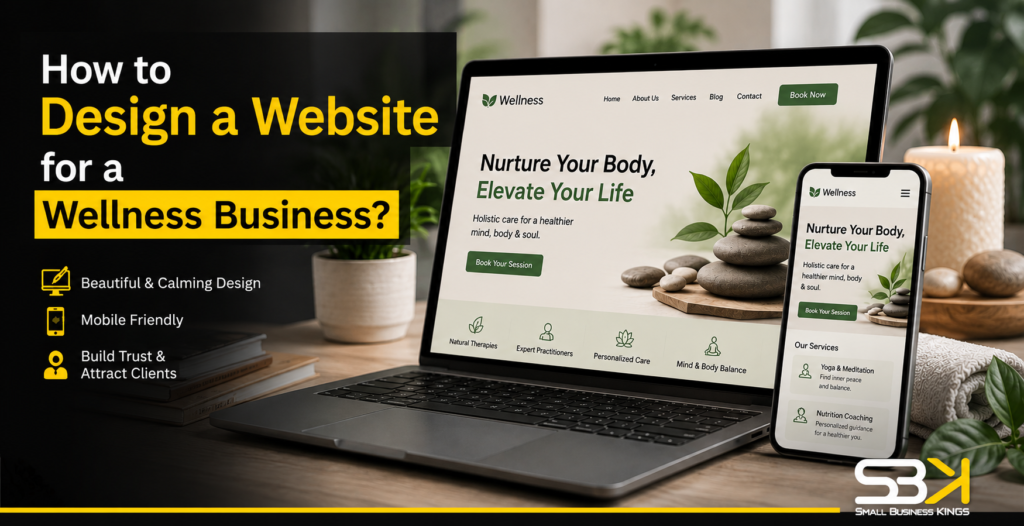
How to Design a Website for a Wellness Business?
A wellness business website needs a calming, brand-consistent visual design, clear service and pricing pages, an integrated booking system, and mobile-first performance — built around what a first-time visitor needs to understand and act on within seconds of landing on your site. Getting this right matters more for wellness businesses specifically than most industries, since trust and a sense of calm are part of what you’re actually selling before a client ever walks through your door.
Decide First: Build It Yourself or Hire It Out
Before touching colors or copy, make this call honestly, since it shapes your entire timeline and budget:
- DIY with a website builder makes sense if you have real time to invest in learning the platform, a modest budget, and a straightforward service offering that fits a template reasonably well. Expect real hours of setup time even with a good template — this isn’t a same-afternoon task if you want it done well.
- Hiring a designer or agency makes sense if your time is better spent running your business than learning web design, your brand needs genuine customization beyond a template, or you’re launching multiple services/locations that a template struggles to represent cleanly.
Neither choice is inherently better — it’s a real trade-off between your time and your budget, and being honest about which one you actually have more of will save you from a half-finished DIY site or an unnecessarily expensive custom build.
Start With Your Audience and Goals, Not the Design
Before choosing colors or fonts, get specific about:
- What action do you most want a visitor to take? Book a session, join a program, sign up for a newsletter — pick one primary goal per page rather than competing calls to action.
- Who is your ideal client, specifically? A high-energy fitness studio and a meditation-focused therapy practice are targeting very different emotional states, and your entire design should reflect that difference rather than defaulting to generic “wellness” aesthetics.
- What’s the actual buying decision your visitor is making? Price comparison, credential verification, or simply “does this feel like the right fit for me” — this shapes what content needs to be most prominent.
Build Your Brand Identity Before You Design Pages
- Color palette matched to your specific niche, not wellness generically: soft blues and greens for meditation, spa, or therapy practices generally read as calming; warmer, higher-contrast tones can work better for fitness or high-energy coaching brands where you want to convey energy rather than stillness. Match the emotional register of the color to what you’re actually selling, not a generic “wellness” template.
- Legible, clean fonts — pair a distinctive heading font with a highly readable body font (avoid overly decorative fonts for body copy, since readability matters more than personality once someone starts reading a full paragraph)
- Consistent tone and voice across every page — decide whether your brand is warm and personal, clinical and credential-forward, or high-energy and motivational, and keep that consistent from your homepage headline through your booking confirmation emails
Free Business Blueprint
Steal the roadmap smart entrepreneurs use to launch, grow, and scale their businesses while avoiding expensive mistakes.
Launch Your Business On Fast VPS Hosting
Secure, high-performance hosting designed for growth. Don't lose sales to slow site speed.
Structure Your Core Pages
Most wellness sites need these pages at minimum:
| Page | Primary Purpose | Key Elements |
|---|---|---|
| Home | Communicate what you do and for whom, within seconds | Clear headline, primary CTA, brief credibility signal (testimonial snippet or credential) |
| Services | Let visitors understand offerings and pricing | Specific service descriptions, pricing or pricing tiers, who each service is actually for |
| About | Build trust through your story and credentials | Your background, training/certifications, philosophy or approach |
| Testimonials | Provide social proof | Real client reviews, ideally with enough specificity to feel genuine rather than generic |
| Contact/Booking | Convert interest into an actual appointment | Simple form, phone/email, integrated booking calendar |
| Blog/Resources (optional but valuable) | Build ongoing authority and SEO | Content addressing questions your specific audience actually searches for |
What a Genuinely Well-Structured Service Page Looks Like
Since most guidance stops at “describe your services,” here’s a concrete structure:
- Service name and a one-sentence outcome statement — not just “60-Minute Massage” but what the client actually walks away with
- Who this is for — a specific description of the ideal client for this particular service, not a repeat of your general audience description
- What’s included — session length, what happens during it, any preparation needed
- Pricing, clearly stated — hidden or vague pricing is one of the most common reasons a visitor leaves without booking
- A direct booking CTA — not just “contact us,” but a button that goes straight into your scheduling tool
- One relevant testimonial specific to that service, if you have one — a general testimonial on every page is less persuasive than one that speaks to the exact service the visitor is considering
Add Booking Functionality That Actually Reduces Friction
- Integrate real-time scheduling directly into your site rather than routing visitors to “call us to book” — every extra step between interest and a confirmed appointment loses potential clients
- Show actual availability, not just a contact form, so visitors can see and claim an open slot immediately
- Send automated confirmations and reminders to reduce no-shows, which matters more for wellness businesses than most industries given the personal time commitment involved in many services
- Keep the booking flow mobile-friendly specifically — a booking calendar that’s easy on desktop but cramped or broken on a phone will lose a meaningful share of visitors, since wellness searches skew heavily toward mobile
Handle Privacy and Accessibility as Real Compliance Issues — Not Just Design Nice-to-Haves
This is where most wellness website guidance stops short, and it matters more for this industry than most:
- If your intake forms or booking system collect health information — symptoms, medical history, health goals tied to a therapeutic service — understand whether HIPAA or similar privacy considerations apply to your specific practice. Requirements vary significantly depending on your service type and how you collect and store this information, so this is worth a direct conversation with a healthcare compliance professional or attorney rather than assuming a standard booking tool automatically handles it correctly.
- Design with genuine accessibility in mind, not just as a design principle but as a real legal consideration. Small business websites have increasingly faced legal claims related to inaccessible design (insufficient color contrast, missing alt text, forms that don’t work with screen readers). Concrete steps: sufficient contrast between text and background, alt text on all meaningful images, captions on video content, and a site that’s genuinely navigable via keyboard alone.
- Test your actual forms and booking flow with accessibility tools, not just visually — a form that looks fine but can’t be completed by someone using a screen reader is both an ethical and a legal exposure.
Optimize for Search Without Overcomplicating It
- Use specific, local keywords naturally — “yoga studio in [your city]” or “nutrition coaching for new parents” performs better than generic terms, since specificity matches how people actually search for local wellness services
- Compress images and minimize unnecessary plugins to keep load times fast — a slow-loading site loses visitors before they ever see your calming color palette
- Claim and complete your Google Business Profile, linked consistently to your website, since local search is where a meaningful share of wellness clients start their search
- Build a modest, consistent blog cadence around questions your specific audience actually searches — this compounds over time in a way a static site alone doesn’t
Getting Your Website Actually Built
Once you know your audience, your core pages, and your booking needs, the actual build is where a lot of DIY attempts stall out — templates rarely fit a specific brand as cleanly as they look in a demo, and getting booking, branding, and mobile performance all working smoothly together takes real technical attention. SBK works with Softangles for exactly this — they handle business website design, hosting, logo and brand/media design, and CRM/sales pipeline setup, which means your booking flow, client records, and branding all work together as one coordinated system instead of a template you’re wrestling with alone.
Maintaining Your Site After Launch
Launch isn’t the finish line — a stale wellness website undercuts the trust you’re trying to build:
- Keep testimonials current, adding recent ones periodically rather than letting the same three reviews sit for years
- Update service pricing and availability promptly — nothing undermines trust faster than a visitor booking a service at an outdated price
- Refresh photos periodically, especially team photos and space photos, since an outdated image of your studio or team creates a small but real credibility gap
- Monitor your site’s load speed and mobile performance periodically, since both can degrade over time as you add content, images, and plugins
Frequently Asked Questions
Should I build my wellness website myself or hire a designer?
DIY makes sense with a modest budget, real time to invest, and a straightforward service that fits a template well, while hiring out is worth it if your time is better spent running your business or your brand needs genuine customization. Be honest about which resource — time or budget — you actually have more of before deciding.
What colors work best for a wellness website?
Match your color palette to your specific niche rather than a generic “wellness” default — soft blues and greens generally suit meditation, spa, or therapy practices, while warmer, higher-contrast tones can better convey energy for fitness or high-intensity coaching brands. The right palette reflects the emotional experience you’re actually selling, not wellness as a broad category.
Do wellness websites need to worry about HIPAA compliance?
It depends on your specific service and what information your intake forms or booking system actually collect — practices gathering health history or therapeutic details should confirm their specific obligations with a healthcare compliance professional or attorney rather than assuming a standard booking tool handles this automatically. Requirements vary significantly by practice type, so this isn’t something to guess at.
How many pages does a wellness business website actually need?
At minimum, a home page, services page, about page, contact/booking page, and a place for testimonials — a blog or resources section is valuable but optional depending on your capacity to maintain it. Each page should have one clear primary purpose rather than trying to accomplish everything on a single page.
Is website accessibility actually a legal concern for a small wellness business?
Yes — inaccessible small business websites (insufficient contrast, missing alt text, forms that don’t work with screen readers) have increasingly faced legal claims, making accessibility a genuine compliance consideration rather than just a design preference. Testing your actual forms and booking flow with accessibility tools, not just reviewing them visually, is worth the extra step.
Launch Your Business On Fast VPS Hosting
Secure, high-performance hosting designed for growth. Don't lose sales to slow site speed.
How often should I update my wellness website after launch?
Keep testimonials, pricing, and availability current on an ongoing basis, and refresh photos periodically so the site doesn’t feel stale to returning visitors. A blog, if you maintain one, benefits from a consistent — even if modest — posting cadence rather than sporadic bursts of content.