

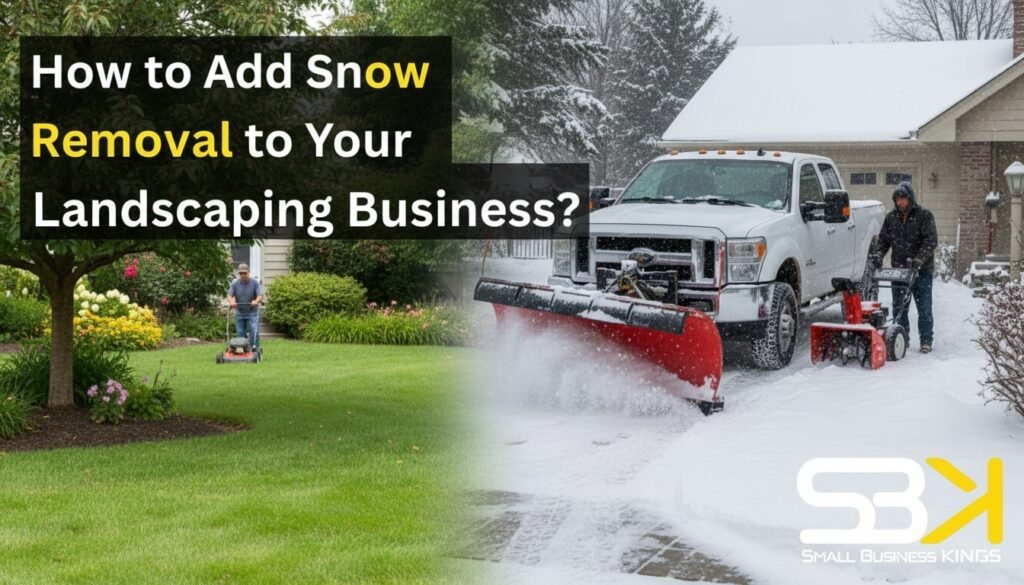
How to Add Snow Removal to Your Landscaping Business?
Adding snow removal to a landscaping business means converting your existing client relationships into winter contracts, choosing a pricing model that protects your margins during unpredictable snowfall, updating your insurance for plow-related liability, and building a route and staffing plan that can respond within hours of a storm. Done right, it turns your slowest season into a genuine second revenue stream rather than a scramble every time it snows.
Why This Is Worth the Operational Complexity
Landscaping revenue drops off hard once the growing season ends, but payroll, equipment loans, and overhead don’t pause for winter. Snow removal fills that gap using assets you already have — trucks, trained crews, and most importantly, a client base that already trusts you. The tradeoff is that snow removal behaves nothing like landscaping: demand is weather-triggered rather than scheduled, response windows are measured in hours rather than days, and liability exposure is meaningfully higher. Businesses that treat it as “landscaping with snow” instead of its own distinct operation tend to struggle with the unpredictability; the ones that succeed build a genuinely separate operational plan for it.
Step 1: Convert Your Existing Client Base First
Before spending on equipment, find out how many of your current clients actually want winter service. This isn’t just marketing — it’s market research that determines what you need to buy.
- Reach out early, before the first snowfall. Email, direct mail, phone calls, and word-of-mouth from your on-site crews all work; the point is giving clients enough lead time to commit before they book someone else.
- Offer an incentive for existing clients to sign now. A modest discount or priority-scheduling guarantee for early sign-ups gives you a real client list before you commit to equipment purchases.
- Separate residential from commercial inquiries immediately. Commercial properties — parking lots, retail entrances — typically carry tighter liability expectations and faster response requirements than a residential driveway, and that difference should shape both your pricing and your equipment list.
A pre-season client list does double duty: it de-risks your equipment investment (you’re buying for known demand, not guessing), and it gives you real numbers to build a staffing and route plan around before the pressure of an actual storm.
Step 2: Choose a Pricing Model That Matches Your Risk Tolerance
This is the area where most landscaping businesses new to snow removal get it wrong, because none of the standard approaches work quite like flat-rate lawn care pricing. Three models dominate the industry, and each shifts weather risk differently between you and the client.
🚀 Top Rated Web Hosting ⚠ Save 30% TodayLaunch Your Business On Fast VPS Hosting
Secure, high-performance hosting designed for growth. Don't lose sales to slow site speed.
Per-Push (Per-Visit) Pricing
You charge a set rate every time you clear a property, regardless of season totals. This is simple to explain to clients and easy to invoice, but it means your revenue swings directly with snowfall — a light winter can leave a route under-earning relative to the labor and equipment you’ve committed to it.
Seasonal Flat-Rate Contracts
The client pays one fee for the entire winter, regardless of how many times you show up. This gives you predictable revenue regardless of snowfall totals, which is valuable for cash flow and staffing decisions, but it means you carry the risk in a heavy snow year — you’re contractually obligated to keep clearing even if visit counts run well above what you priced for.
Per-Inch or Tiered Pricing
Price scales with storm severity — a light dusting costs less than a major accumulation event. This is the most precise way to match price to actual labor and material cost, but it’s also the most complex to communicate to clients and the hardest to invoice cleanly, since you need a documented, agreed-upon way to measure and record snowfall for each job.
How to Actually Decide
Most businesses new to snow removal do best starting with seasonal flat-rate contracts for a portion of their book and per-push for the rest — using historical local snowfall averages (available through NOAA’s National Weather Service data for your region) to price the seasonal contracts conservatively enough to cover a heavier-than-average winter, and reserving per-push for clients who prefer to pay only for what they use. Per-inch/tiered pricing is worth adopting later, once you have a season or two of your own job-cost data to price it accurately — trying to price tiered contracts in your first year, before you know your own labor and equipment costs per storm, is where new entrants tend to underprice themselves.
Step 3: Get Specific About Insurance and Contract Protection
This is the step every source treats as a one-line reminder (“update your insurance,” “consult a broker”) without explaining what actually needs to change. Here’s the more concrete version.
What Changes in Your Insurance
Snow and ice work introduces liability exposure that standard landscaping general liability may not fully cover — plowing damage to a client’s property (curbs, landscaping, parked vehicles), and slip-and-fall injuries on surfaces you were contracted to clear. Before your first job:
- Ask your insurance broker directly whether your current general liability policy excludes or limits snow and ice removal work. Many landscaping policies do, since it’s a distinct risk category from mowing or planting.
- Confirm your commercial auto policy covers plow attachments if you’re mounting plows on trucks — this can affect both liability and physical damage coverage.
- Review your workers’ compensation policy to confirm it accounts for the different injury risks of winter operations (slips, cold exposure, equipment-related injuries) versus standard landscaping tasks.
Insurance requirements, available riders, and typical coverage structures vary by state and by carrier, so treat this as a conversation to have directly with a licensed insurance professional rather than a checklist to self-serve — get a written confirmation of exactly what’s covered before your first snow event, not after.
Free Business Blueprint
Steal the roadmap smart entrepreneurs use to launch, grow, and scale their businesses while avoiding expensive mistakes.
What Belongs in Your Snow Removal Contract
A generic landscaping service agreement isn’t sufficient for snow removal. At minimum, your contract should specify:
- A trigger depth — the snowfall accumulation (for example, once snow reaches a specified depth) at which you’re contractually obligated to begin clearing. This protects you from being expected to respond to every light dusting and gives the client clarity on when to expect service.
- A hold-harmless clause addressing slip-and-fall risk on the property once your service has been completed, since you can’t guarantee a surface stays completely ice-free between visits in active winter weather.
- Clear service scope — driveway only, or driveway plus walkways, or full parking lot plus entrances for commercial clients — since scope disputes are one of the most common sources of client complaints in this business.
- A documented process for disputing when a trigger depth was reached, such as referencing a specific local weather station or your own logged measurements, so disagreements over “it never really snowed that much” have an objective reference point.
Have an attorney familiar with service contracts in your state review your template before your first season — this is a one-time cost that meaningfully reduces your exposure to disputes and claims later.
Step 4: Plan Equipment Around Confirmed Demand, Not Guesses
Your pre-season client list from Step 1 should drive your equipment purchases, not the other way around. Rough guidance by client type:
| Property Type | Typical Equipment Needs | Response Expectation |
|---|---|---|
| Residential driveways/walkways | Snow shovels, walk-behind snowblowers, hand-applied salt/ice melt | Same day, often within a few hours |
| Small commercial (retail entrances, small lots) | Truck-mounted plows, tailgate salt spreaders | Before business opens, often overnight |
| Large commercial (parking lots, campuses) | Larger plow trucks, bulk salt/brine spreading equipment, possibly subcontracted loader support | Continuous coverage during and immediately after a storm |
Don’t buy for your largest hypothetical commercial contract before you’ve actually signed it. Start with equipment sized to your confirmed pre-season client list, and plan a clear path to scale (renting additional equipment for a single unusually large storm, for instance) rather than over-investing in capacity you may not use in year one.
Step 5: Build a Storm-Response Plan Before the First Snowfall
Once clients are signed and equipment is in place, the operational challenge shifts to responding fast and consistently during unpredictable weather.
- Pre-build your routes geographically, not by client sign-up order, so crews clear a tight cluster of properties in sequence rather than crisscrossing town.
- Prioritize by contractual obligation and liability exposure — commercial properties with fine or liability exposure for uncleared snow typically need to go first, followed by residential clients with tight time-of-day needs (early morning commuters, for example).
- Have a written plan for multi-day or all-day snowfall events, and communicate it to clients in advance: will you clear once in early morning and again in late afternoon, or focus on a single end-of-day pass? Clients who know what to expect complain far less than those left guessing.
- Set up on-call staffing communication before the season starts — a simple system for notifying available crew of an incoming storm saves critical response time compared to calling through a list reactively once snow starts falling.
Step 6: Automate Billing So Cash Flow Doesn't Lag Behind Labor
Snow removal billing has a different rhythm than landscaping — jobs often happen overnight or on short notice, and if invoicing lags, so does your cash flow during the exact season you added this service to protect. Keep client payment information on file in advance, invoice immediately after each job (rather than batching at the end of the week), and use whatever business management or field service software you’re already running to track job costs per property — labor hours, materials used, and equipment time — so you know which contracts are actually profitable, not just busy.
Getting Winter Clients to Find You Before They Book a Competitor
Once your existing client base is locked in, the next opportunity is new customers actively searching for snow removal in your area — and many of them are searching in a panic, the morning after the first big storm. Having an up-to-date Google Business Profile and a website that clearly lists your service area and winter offerings matters more here than in most seasonal services, since these searches are urgent and conversion-sensitive. If your current website doesn’t already make it obvious that you offer snow removal and how quickly you respond, that’s a real cost in missed bookings during your busiest weeks. SBK works with Softangles for exactly this: they handle business website design and hosting, logo and brand/media design, and CRM/sales pipeline setup, so new winter inquiries land somewhere organized instead of getting lost in a scramble during your first storm of the season.
Frequently Asked Questions
How do I decide between per-push and seasonal contract pricing?
Per-push pricing works well if you want to bill only for actual work performed and don’t mind revenue swinging with snowfall totals, while seasonal contracts give you predictable cash flow but require you to price conservatively enough to cover a heavier-than-typical winter. Many businesses new to snow removal use a mix — seasonal contracts for reliable, high-volume clients and per-push for the rest — until they have enough of their own job-cost data to price tiered or per-inch models accurately.
What insurance changes do I actually need before offering snow removal?
Confirm directly with your insurance broker whether your existing general liability policy excludes snow and ice work, check that your commercial auto policy covers any plow attachments you’re adding, and review your workers’ compensation coverage for winter-specific injury risks. Get this confirmed in writing before your first job, since coverage details and available riders vary by carrier and by state.
How much should I invest in equipment before my first season?
Size your initial equipment purchase to the confirmed client list you build in Step 1, not a hypothetical maximum — a pre-season sign-up campaign gives you real numbers to work from. It’s generally lower-risk to rent additional capacity for an unusually large storm in year one than to over-invest in equipment you may not use consistently.
What should a snow removal contract include that a standard landscaping contract doesn’t?
At minimum, include a trigger depth that defines when you’re obligated to begin clearing, a hold-harmless clause addressing slip-and-fall risk after service, clearly defined scope (driveway only versus full property), and a documented, objective way to resolve disputes about whether a trigger depth was actually reached. Have an attorney familiar with your state’s contract law review the template before your first season.
How do I handle snow that falls continuously over multiple days?
Decide in advance whether you’ll clear on a fixed schedule (for example, once in early morning and again in late afternoon) or wait for a break in the storm, and communicate that plan to clients before the season starts rather than during an active storm. Clients who know what to expect generally complain far less than those left guessing whether or when you’ll show up.
Launch Your Business On Fast VPS Hosting
Secure, high-performance hosting designed for growth. Don't lose sales to slow site speed.
Do I need different equipment for residential versus commercial snow removal?
Generally yes — residential properties are usually manageable with shovels and walk-behind snowblowers, while commercial parking lots and larger properties typically require truck-mounted plows and bulk salt or brine spreading equipment. Let your confirmed pre-season client mix, not assumptions, determine which equipment tier you actually need to invest in first.